

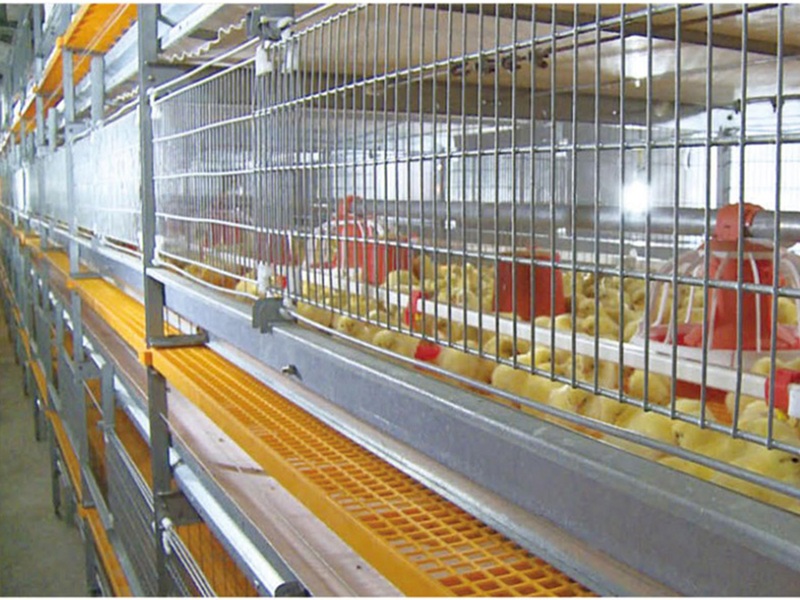
Automatic Layer Farming Equipment Enhances Egg Handling and Production Control
Industry Background and Market Demand
The global demand for eggs continues to rise, driven by population growth, urbanization, and increasing protein consumption. In response, poultry farms are adopting automated solutions to improve efficiency, reduce labor costs, and enhance production consistency. Traditional manual egg collection and handling methods are prone to inefficiencies, contamination risks, and inconsistent quality control.
Automatic layer farming equipment addresses these challenges by integrating mechanized egg collection, grading, and packaging systems. These solutions are particularly critical in large-scale operations where precision and hygiene directly impact profitability. The market for automated poultry equipment is projected to grow steadily, with farms prioritizing investments in technology that ensures higher yield, reduced breakage rates, and compliance with food safety regulations.
Core Concepts and Key Technologies
Modern automatic layer farming systems rely on several key technologies:
- Automated Egg Collection Systems – Conveyor belts or robotic arms gently transport eggs from nesting areas to central processing units, minimizing human contact and breakage.
- Grading and Sorting Mechanisms – Optical sensors and weight-based systems categorize eggs by size, weight, and shell quality, ensuring uniformity in packaging.
- Climate and Environmental Control – Integrated sensors monitor temperature, humidity, and ammonia levels, optimizing conditions for both bird health and egg preservation.
- Data-Driven Production Monitoring – IoT-enabled devices track daily production metrics, enabling real-time adjustments to feeding schedules and lighting conditions.
These technologies work synergistically to reduce waste, improve traceability, and maintain consistent output.
Product Structure and Manufacturing Considerations
High-performance automatic layer farming equipment is typically constructed from food-grade stainless steel or corrosion-resistant polymers to ensure durability and compliance with hygiene standards. Critical components include:
- Modular Conveyor Systems – Designed for easy cleaning and minimal maintenance.
- Precision Sensors – High-resolution cameras and load cells for accurate grading.
- Central Control Units – Programmable logic controllers (PLCs) that manage system operations.
Manufacturers prioritize robust engineering to withstand harsh farm environments while minimizing energy consumption. Advanced welding techniques and anti-microbial coatings are often applied to extend equipment lifespan.
Factors Affecting Performance and Quality
Several variables influence the effectiveness of automated egg handling systems:
1. Equipment Calibration – Misaligned sensors or improperly tensioned conveyors can lead to grading errors or egg damage.
2. Maintenance Protocols – Regular cleaning and lubrication prevent mechanical failures.
3. Farm Layout Integration – Systems must be tailored to coop dimensions and bird density to avoid bottlenecks.
4. Operator Training – Staff must understand troubleshooting procedures to minimize downtime.
Proactive monitoring and predictive maintenance significantly enhance long-term reliability.
Supplier Selection and Supply Chain Considerations
When sourcing automatic layer farming equipment, buyers should evaluate:
- Technical Support Availability – Suppliers should offer onsite training and responsive service networks.
- Compliance Certifications – Equipment must meet regional food safety (e.g., EU Regulation 852/2004) and machinery safety directives.
- Scalability – Systems should accommodate future farm expansions without requiring complete overhauls.
Leading suppliers often provide modular designs, allowing farms to phase in automation based on budget and production needs.
Industry Challenges and Common Issues
Despite technological advancements, several pain points persist:
- High Initial Investment – Smaller farms may struggle with upfront costs, though ROI is typically achieved within 2–3 years.
- Power Dependency – Equipment failures during outages can disrupt entire production cycles, necessitating backup power solutions.
- Sanitation Complexity – Automated systems require thorough cleaning routines to prevent bacterial buildup.
Frequently asked questions include:
Q: How does automation reduce egg breakage rates?
A: Gentle handling via cushioned conveyors and reduced manual transfers lower physical stress on eggs, maintaining structural integrity.
Q: Can older farms retrofit automated systems?
A: Yes, many manufacturers offer customizable solutions for retrofitting existing coops with minimal structural modifications.
Application Scenarios and Case Examples
A midwestern U.S. egg producer reported a 22% increase in daily yield after installing an automated grading system, coupled with a 15% reduction in labor costs. In the Netherlands, a farm utilizing IoT-enabled climate controls achieved a 30% drop in ammonia emissions while improving eggshell strength.
Such cases demonstrate how automation enhances both productivity and sustainability.
Current Trends and Future Outlook
Emerging innovations include:
- AI-Powered Defect Detection – Machine learning algorithms identify hairline cracks or abnormalities with greater accuracy than traditional sensors.
- Energy-Efficient Designs – Solar-powered egg collection systems are gaining traction in off-grid farms.
- Blockchain Traceability – Some producers integrate blockchain to track eggs from farm to retailer, boosting consumer transparency.
The industry is moving toward fully autonomous farms, where robotics and AI manage feeding, egg collection, and health monitoring with minimal human intervention.
Conclusion
Automatic layer farming equipment represents a transformative shift in poultry production, offering measurable gains in efficiency, quality control, and operational scalability. As technology evolves, farms adopting these systems will likely maintain a competitive edge in an increasingly demanding market. Strategic investment in automation—coupled with proper maintenance and training—ensures sustainable growth for modern egg producers.
Бул веб-сайт биздин веб-сайтта эң жакшы тажрыйбаны алуу үчүн кукилерди колдонот.
 English
 Pусский
 Français
 العربية
 Indonesia
 қазақ
қазақ o'zbek
 тоҷикӣ
 Türkmenler
 Catalogue



 Whatsapp
 Телефон
Комментарий
(0)