

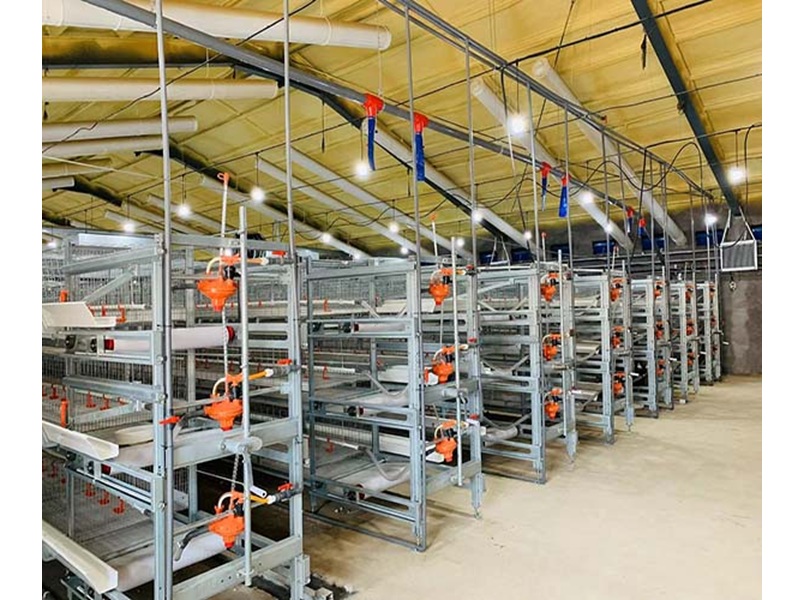
Smart poultry automation systems Modernize Commercial Farm Operations
Industry Background and Market Demand
The global poultry industry faces mounting pressure to improve efficiency, reduce operational costs, and meet stringent food safety regulations. With rising labor shortages and increasing consumer demand for ethically sourced poultry products, commercial farms are turning to smart poultry automation systems to enhance productivity while maintaining animal welfare standards.
According to industry reports, the market for poultry farm automation is projected to grow at a CAGR of 7.2% from 2023 to 2030, driven by advancements in IoT, AI-driven analytics, and robotics. Large-scale producers in North America and Europe are leading adoption, leveraging automation to optimize feed management, climate control, and disease monitoring.
Core Concepts and Key Technologies
Smart poultry automation integrates multiple technologies to streamline farm operations:
- IoT Sensors – Monitor environmental conditions (temperature, humidity, ammonia levels) in real time.
- Automated Feeding Systems – Precision dispensers adjust feed rations based on flock weight and growth stages.
- Robotic Egg Collection – Reduces breakage and labor dependency.
- AI-Powered Health Monitoring – Cameras and thermal imaging detect early signs of disease or stress.
- Climate Control Automation – Ventilation systems dynamically adjust airflow to maintain optimal conditions.
These technologies work synergistically to minimize human intervention while maximizing flock health and yield.
System Architecture and Performance
A fully integrated poultry automation system typically consists of:
1. Control Hub – Centralized PLC (Programmable Logic Controller) or cloud-based platform for data aggregation and decision-making.
2. Sensor Network – Distributed across poultry houses to collect environmental and behavioral data.
3. Actuators and Robotics – Automated feeders, water lines, and egg collection arms.
4. Data Analytics Dashboard – Provides actionable insights on feed conversion ratios, mortality rates, and energy consumption.
High-performance systems use stainless steel components for durability in humid environments, while modular designs allow scalability for farms of varying sizes.
Critical Factors Affecting Performance
Several variables influence the effectiveness of poultry automation:
- Sensor Accuracy – Faulty readings can lead to improper climate or feed adjustments.
- System Integration – Disparate technologies must communicate seamlessly via standardized protocols (e.g., LoRaWAN, MQTT).
- Power Reliability – Backup systems are essential to prevent disruptions during outages.
- Maintenance Protocols – Dust and moisture resistance is critical for long-term operation.
Investing in ruggedized hardware and predictive maintenance software mitigates these risks.
Supplier Selection and Supply Chain Considerations
When sourcing poultry automation equipment, commercial farms should evaluate:
- Certifications – Compliance with ISO 9001, CE, or local agricultural standards.
- Technical Support – Availability of on-site service and remote diagnostics.
- Modularity – Systems should allow incremental upgrades without full replacements.
- Local vs. Global Suppliers – Proximity reduces lead times but may limit technology options.
Leading suppliers include Big Dutchman, Chore-Time, and Roxell, which offer end-to-end solutions with proven field performance.
Common Challenges and Industry Pain Points
Despite their advantages, smart poultry systems face adoption barriers:
1. High Initial Costs – Smaller farms may struggle with ROI justification.
2. Technical Complexity – Staff training is essential to avoid operational errors.
3. Data Security Risks – Cloud-based systems require robust cybersecurity measures.
4. Interoperability Issues – Proprietary systems may limit third-party integrations.
Gradual implementation and phased financing models help mitigate these challenges.
Application Scenarios and Case Studies
Case 1: Large-Scale Broiler Farm in Germany
A 100,000-bird facility deployed IoT-enabled climate control, reducing energy costs by 18% and improving feed efficiency by 12% within six months.
Case 2: Free-Range Egg Producer in the U.S.
Automated nest monitoring and robotic collection cut labor costs by 30% while increasing egg yield by 8%.
These examples demonstrate how automation enhances both economic and animal welfare outcomes.
Current Trends and Future Outlook
Emerging innovations shaping the future of poultry farm automation include:
- Blockchain Traceability – Ensures transparency in supply chains.
- Autonomous Drones – Monitor flock health in open-range systems.
- Edge AI – On-device processing reduces latency for real-time decisions.
- Sustainable Energy Integration – Solar-powered systems lower carbon footprints.
As precision livestock farming evolves, automation will become indispensable for competitive poultry operations.
FAQ
Q: How long does it take to recoup the investment in poultry automation?
A: Most farms achieve ROI within 2–4 years through labor savings and yield improvements.
Q: Can automation systems be retrofitted into older poultry houses?
A: Yes, modular designs allow partial upgrades, though structural assessments are recommended.
Q: What’s the biggest risk when adopting automation?
A: Over-reliance on technology without proper staff training can lead to operational failures.
By integrating smart poultry automation, commercial farms can future-proof their operations while meeting the dual demands of efficiency and sustainability.
Бул веб-сайт биздин веб-сайтта эң жакшы тажрыйбаны алуу үчүн кукилерди колдонот.
 English
 Pусский
 Français
 العربية
 Indonesia
 қазақ
қазақ o'zbek
 тоҷикӣ
 Türkmenler
 Catalogue



 Whatsapp
 Телефон
Комментарий
(0)