
 English
 Pусский
 Français
 العربية
 Indonesia
 қазақ
қазақ o'zbek
 тоҷикӣ
 Türkmenler
 Catalogue
Feed Production Line
Feed Production Line Overview A feed production line is an integrated system designed to manufacture high-quality animal feed efficiently and consistently. It involves multiple stages, including raw material handling, grinding, mixing, pelleting, cooling, and packaging, each contributing to the final product's nutritional value, safety, and physical properties. 1. Raw Material Handling The process begins with the reception and storage of raw materials such as grains, protein meals, vitamins, and minerals. Ingredients are inspected for quality and then transported via conveyors or elevators to storage silos. Proper handling ensures minimal contamination and maintains ingredient integrity. 2. Grinding Raw materials are ground to a uniform particle size using hammer mills or roller mills. Grinding improves digestibility and ensures even mixing in subsequent stages. The fineness of grinding can be adjusted based on the feed type (e.g., mash, pellets, or crumbles). 3. Mixing Ground ingredients are precisely weighed and blended in a mixer to achieve a homogenous mixture. Micro-ingredients like vitamins, minerals, and additives are added at this stage to meet nutritional requirements. Uniform mixing is critical to ensure every feed portion contains balanced nutrients. 4. Pelleting (Optional) For pellet feed, the mixed mash is conditioned with steam to soften it and then compressed into dense pellets using a pellet mill. Pelleting improves feed efficiency, reduces waste, and enhances palatability. The pellets are then cooled to room temperature to stabilize moisture content. 5. Crumbling (Optional for Starter Feeds) For young animals, pellets may be crumbled into smaller particles to facilitate easier consumption. 6. Packaging and Storage The finished feed is weighed and packed into bags or stored in bulk containers. Proper packaging ensures protection from moisture, pests, and contamination. Automated bagging systems improve efficiency and reduce labor costs. 7. Quality Control Throughout production, quality checks are conducted to monitor ingredient composition, pellet durability, moisture levels, and microbiological safety. Advanced feed lines may include automated sampling and real-time monitoring systems. Key Features of Modern Feed Lines - Automation: Reduces human error and increases efficiency. - Flexibility: Can produce different feed types (mash, pellets, crumbles) with quick adjustments. - Hygiene: Designed to minimize cross-contamination and comply with food safety standards. - Energy Efficiency: Modern systems optimize energy use, reducing operational costs. A well-designed feed production line ensures consistent quality, maximizes nutritional value, and meets the demands of livestock, poultry, and aquaculture industries.
Product
Category:
-
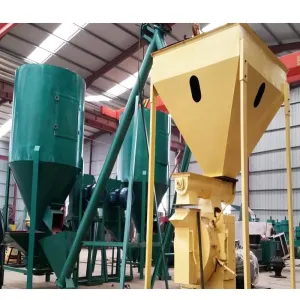
Feed Production Line
Category: Chicken Feed Production MachineBrowse number: 146Number:Release time: 2025-11-19 14:24:31A Feed Production Line is an integrated system designed to produce high-quality livestock, poultry, and aquatic feed on a continuous and efficient basis. It combines multiple processing stages—including raw material receiving, crushing, mixing, pelletizing, cooling, screening, and packaging—into a seamless workflow.
News
Category:
-
[Company News]Commercial Poultry House Systems Adopt New Automation Trends
2025-12-08 08:23:25
Case
Category:
No search results found!
Video
Category:
No search results found!
Download
Category:
No search results found!
Job
Category:
No search results found!
Featured Products
No search results found!



 Whatsapp
 Телефон