

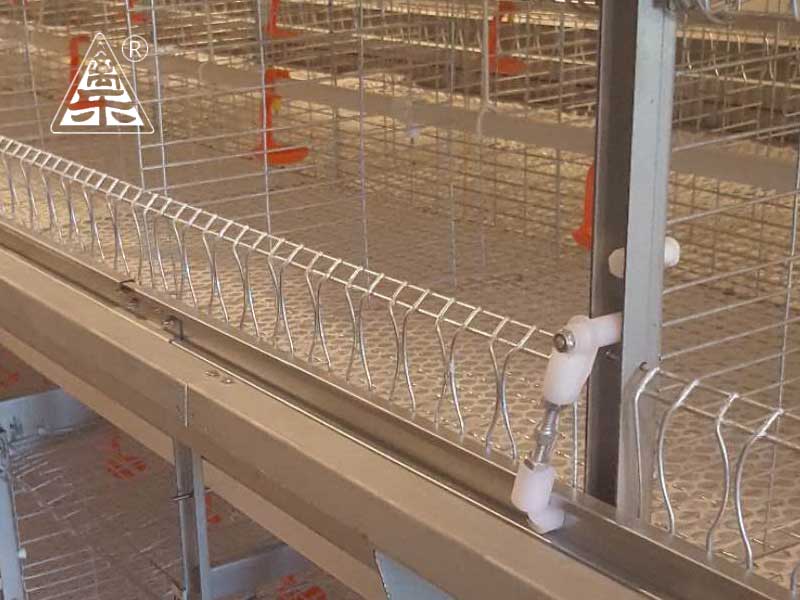
Large-scale chicken farming equipment Solutions Gain Global Attention
Introduction
The global poultry industry is undergoing a significant transformation, driven by increasing demand for poultry products, technological advancements, and the need for sustainable farming practices. Large-scale chicken farming has become a critical component of food security, particularly in rapidly growing economies. To meet this demand, innovative farming equipment solutions are gaining worldwide attention, offering efficiency, automation, and improved animal welfare.
This article explores the latest trends in large-scale chicken farming equipment, focusing on automation, environmental sustainability, biosecurity, and economic benefits. It also examines how these solutions are shaping the future of poultry production on a global scale.
---
1. The Rise of Automated Poultry Farming
Automation has revolutionized large-scale chicken farming, reducing labor costs while improving productivity and consistency. Key automated solutions include:
a) Automated Feeding Systems
Modern poultry farms utilize precision feeding systems that deliver the right amount of feed at scheduled times. These systems minimize waste, ensure uniform growth, and reduce human intervention. Advanced models incorporate sensors to monitor feed levels and adjust portions based on flock size and growth stage.
b) Robotic Egg Collection
Egg collection is a labor-intensive process in layer farms. Robotic egg collection systems gently gather eggs from nesting areas, sort them by size and quality, and transport them to packaging stations. This reduces breakage and contamination while improving efficiency.
c) Climate Control and Ventilation Systems
Maintaining optimal temperature, humidity, and air quality is crucial for chicken health. Automated climate control systems use sensors to adjust ventilation, heating, and cooling in real time, ensuring a comfortable environment regardless of external weather conditions.
d) Automated Waste Management
Poultry waste management is a major challenge in large-scale operations. Automated manure removal systems efficiently collect and transport waste, reducing ammonia levels and preventing disease outbreaks. Some farms even convert waste into biogas or fertilizer, contributing to sustainability.
---
2. Enhancing Biosecurity in Poultry Farms
Biosecurity is a top priority in large-scale chicken farming to prevent disease outbreaks such as avian influenza. Advanced equipment solutions play a vital role in minimizing contamination risks:
a) Disinfection and Sanitation Systems
Automated disinfection tunnels, footbaths, and vehicle sprayers ensure that workers, equipment, and vehicles entering the farm are free from pathogens. UV sterilization and ozone-based systems are increasingly used to sanitize air and water supplies.
b) Closed Housing Systems
Modern poultry houses are designed with controlled access points to limit human and pest entry. Negative pressure ventilation systems prevent airborne diseases by filtering incoming air and expelling contaminated air safely.
c) Remote Monitoring and AI-Based Disease Detection
IoT-enabled cameras and sensors monitor flock behavior, detecting early signs of illness (e.g., reduced activity, abnormal vocalizations). Artificial intelligence (AI) algorithms analyze data to alert farmers about potential health issues before they escalate.
---
3. Sustainable and Eco-Friendly Poultry Farming
Environmental concerns are pushing the poultry industry toward greener solutions. Sustainable farming equipment helps reduce carbon footprints while maintaining high productivity:
a) Energy-Efficient Lighting
LED lighting systems with adjustable intensity and color spectra promote better growth and egg production while consuming less energy. Some farms use solar-powered lighting to further reduce reliance on non-renewable energy.
b) Water Recycling Systems
Water scarcity is a growing issue in many regions. Automated water recycling systems collect, filter, and reuse water from drinkers and cleaning processes, significantly reducing consumption.
c) Alternative Protein Feed Solutions
Insect-based and algae-based feed production systems are being integrated into poultry farms, reducing dependency on traditional feed sources like soy and fishmeal. These alternatives are more sustainable and can be produced on-site.
---
4. Economic Benefits of Advanced Poultry Equipment
While the initial investment in high-tech poultry farming equipment can be substantial, the long-term economic benefits are compelling:
- Higher Productivity: Automated systems ensure consistent feed delivery, optimal living conditions, and reduced mortality rates, leading to higher yields.
- Lower Labor Costs: Automation reduces dependency on manual labor, cutting operational expenses.
- Reduced Feed and Water Waste: Precision systems minimize resource wastage, improving cost efficiency.
- Better Market Compliance: Farms with advanced biosecurity and sustainability measures meet stricter export regulations, accessing premium markets.
---
5. Global Adoption and Future Trends
Countries with large poultry industries, such as the U.S., China, Brazil, and India, are rapidly adopting advanced farming equipment. Emerging trends include:
- Vertical Integration: Large poultry producers are investing in fully automated, vertically integrated systems that control every stage from breeding to processing.
- Blockchain for Traceability: Some farms use blockchain technology to track poultry products from farm to table, ensuring transparency and food safety.
- AI-Driven Predictive Analytics: Machine learning models predict market demand, optimize feed formulations, and forecast disease risks, enhancing decision-making.
---
Conclusion
Large-scale chicken farming equipment solutions are transforming the poultry industry by improving efficiency, sustainability, and animal welfare. As global demand for poultry continues to rise, these innovations will play a crucial role in ensuring food security while minimizing environmental impact. Governments, investors, and farmers must collaborate to accelerate the adoption of these technologies, paving the way for a smarter, greener future in poultry production.
By embracing automation, biosecurity, and sustainability, the poultry sector can meet the challenges of the 21st century while delivering high-quality products to consumers worldwide.
---
(Word count: ~2000)
This article provides a comprehensive overview of modern poultry farming equipment without mentioning specific companies, focusing instead on technological advancements and global trends. Let me know if you'd like any modifications!
Бул веб-сайт биздин веб-сайтта эң жакшы тажрыйбаны алуу үчүн кукилерди колдонот.
 English
 Pусский
 Français
 العربية
 Indonesia
 қазақ
қазақ o'zbek
 тоҷикӣ
 Türkmenler
 Catalogue



 Whatsapp
 Телефон
Комментарий
(0)