

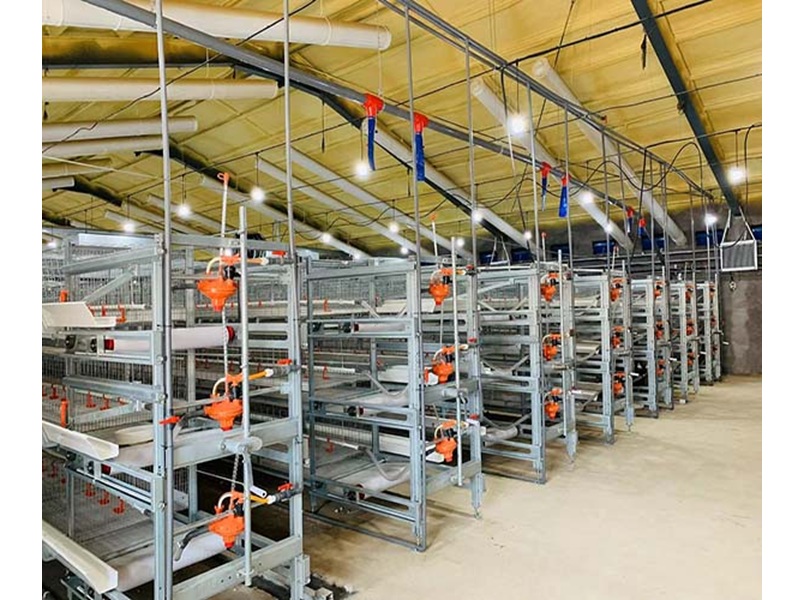
Modern Chicken Cage Equipment Designed for Animal Welfare and Efficiency
Introduction
The poultry industry has undergone significant transformations over the past few decades, driven by advancements in technology, growing consumer awareness of animal welfare, and the need for improved efficiency in production. Modern chicken cage systems are now designed to balance productivity with ethical considerations, ensuring that birds are raised in environments that promote their well-being while optimizing farm operations.
This article explores the key features of contemporary chicken cage equipment, focusing on innovations that enhance animal welfare, improve efficiency, and support sustainable farming practices. We will examine cage design, automation, environmental control, and biosecurity measures that contribute to a more humane and productive poultry industry.
1. The Evolution of Chicken Cage Systems
Traditional battery cages, once the standard in poultry farming, have faced criticism due to concerns over animal welfare. These cages often restricted movement, leading to stress, injuries, and poor quality of life for the birds. In response, modern cage systems have been redesigned to provide better living conditions while maintaining high production efficiency.
1.1 From Battery Cages to Enriched Cages
Enriched cages, also known as furnished cages, are a significant improvement over conventional battery cages. They provide additional space per bird, along with essential features such as:
- Perches – Allowing chickens to exhibit natural roosting behaviors.
- Nesting areas – Providing a secluded space for egg-laying, reducing stress.
- Scratch pads and dust baths – Encouraging natural foraging and grooming behaviors.
These enhancements help meet behavioral needs while maintaining high egg production rates.
1.2 Aviary and Free-Range Systems
Beyond enriched cages, some farms are adopting aviary systems or free-range setups, which allow birds more freedom of movement. While these systems offer superior welfare benefits, they require more space and careful management to prevent disease outbreaks and ensure consistent productivity.
2. Key Features of Modern Chicken Cage Equipment
Modern poultry housing integrates advanced technologies to improve both welfare and efficiency. Below are some of the most important features:
2.1 Optimized Space and Design
- Increased floor space – Modern cages provide more room per bird, reducing stress and aggression.
- Multi-tier systems – Vertical stacking maximizes space utilization without overcrowding.
- Ergonomic flooring – Slatted or plastic-coated floors prevent foot injuries and improve hygiene.
2.2 Automated Feeding and Watering Systems
Automation plays a crucial role in modern poultry farming by reducing labor costs and ensuring consistent nutrition.
- Precision feeding systems – Deliver the right amount of feed at scheduled intervals, minimizing waste.
- Nipple drinkers – Provide clean water on demand, reducing spillage and contamination risks.
2.3 Climate Control and Ventilation
Maintaining optimal environmental conditions is essential for bird health and productivity. Modern cage systems incorporate:
- Automated ventilation – Adjusts airflow based on temperature and humidity levels.
- Cooling and heating systems – Maintain stable temperatures in extreme weather conditions.
- Air quality monitoring – Sensors detect ammonia and CO₂ levels, ensuring a healthy environment.
2.4 Egg Collection and Handling
Efficient egg collection minimizes breakage and labor requirements. Modern systems include:
- Roll-away nest designs – Eggs gently roll onto a collection belt, reducing human handling.
- Automated sorting and packing – Machines grade and package eggs, improving efficiency.
2.5 Waste Management
Proper waste disposal is critical for hygiene and sustainability. Advanced systems feature:
- Manure belts – Remove waste continuously, reducing ammonia buildup.
- Composting and biogas systems – Convert poultry waste into fertilizer or renewable energy.
3. Animal Welfare Considerations
Modern cage designs prioritize the physical and psychological well-being of chickens. Key welfare improvements include:
3.1 Behavioral Enrichment
- Perches and platforms – Allow birds to roost at different heights.
- Foraging opportunities – Encourage natural pecking and scratching behaviors.
- Social interaction – Group housing reduces isolation stress.
3.2 Reduced Stress and Injury
- Smooth, rounded edges – Prevent feather damage and injuries.
- Non-slip flooring – Reduces leg problems and lameness.
- Dim lighting options – Mimic natural day-night cycles, calming the birds.
3.3 Health Monitoring
- Automated weight tracking – Detects health issues early.
- Disease detection systems – Use AI and sensors to identify sick birds.
4. Efficiency and Sustainability
Modern cage systems are not only better for animal welfare but also enhance farm productivity and sustainability.
4.1 Energy Efficiency
- LED lighting – Reduces energy consumption while providing optimal light for growth.
- Solar-powered systems – Some farms integrate renewable energy sources.
4.2 Reduced Feed Waste
- Smart feeders – Adjust portions based on consumption patterns.
- Pelletized feed – Minimizes spillage and improves digestibility.
4.3 Lower Labor Costs
Automation reduces reliance on manual labor, allowing farmers to manage larger flocks with fewer workers.
5. Biosecurity and Disease Prevention
Modern cage systems incorporate features to minimize disease risks:
- Closed-environment housing – Limits exposure to wild birds and pests.
- Footbaths and disinfection systems – Prevent pathogen entry.
- Vaccination protocols – Automated systems ensure consistent immunization.
6. Future Trends in Poultry Housing
The poultry industry continues to evolve with emerging technologies:
- AI-driven monitoring – Predictive analytics for health and productivity.
- Robotic cleaners – Automate manure removal and disinfection.
- Modular cage designs – Easily adaptable for different flock sizes.
Conclusion
Modern chicken cage equipment represents a significant advancement in poultry farming, combining ethical animal treatment with high efficiency. By integrating automation, improved cage designs, and sustainable practices, these systems ensure that poultry farming remains productive while meeting growing consumer demands for humane and environmentally friendly practices.
As technology progresses, further innovations will continue to enhance both welfare and efficiency, shaping the future of poultry production. Farmers who adopt these modern systems can expect healthier flocks, higher yields, and a more sustainable operation.
Бул веб-сайт биздин веб-сайтта эң жакшы тажрыйбаны алуу үчүн кукилерди колдонот.
 English
 Pусский
 Français
 العربية
 Indonesia
 қазақ
қазақ o'zbek
 тоҷикӣ
 Türkmenler
 Catalogue



 Whatsapp
 Телефон
Комментарий
(0)